EN
EN
 cn
cn 


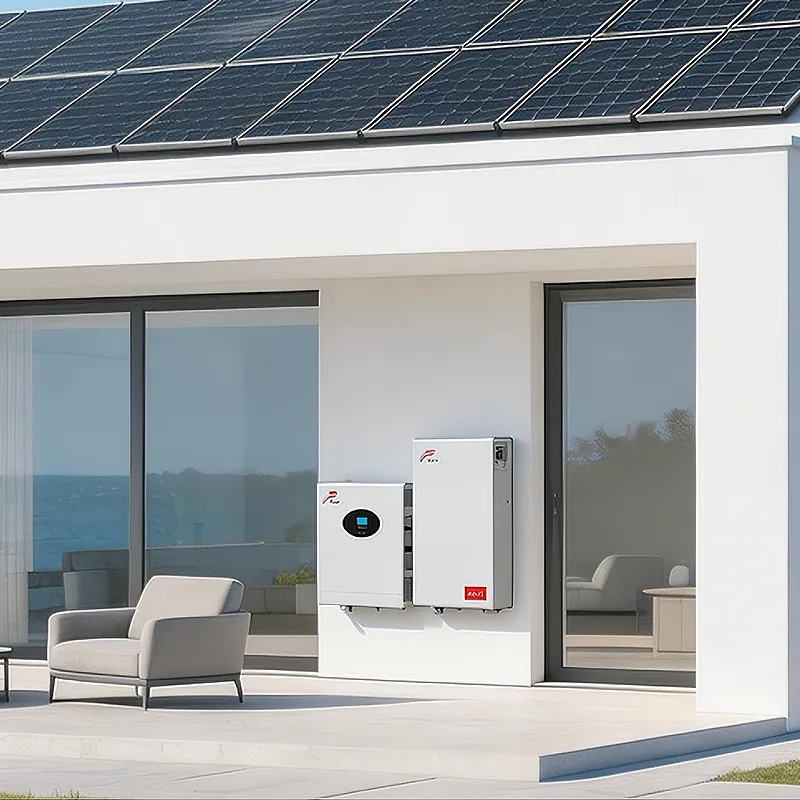
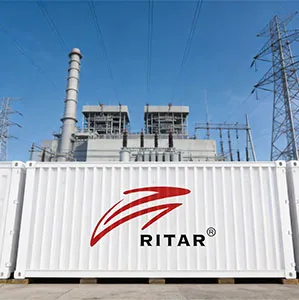
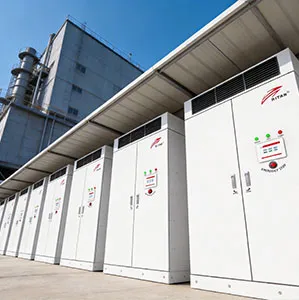
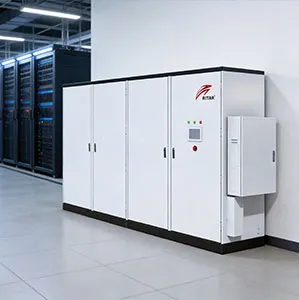
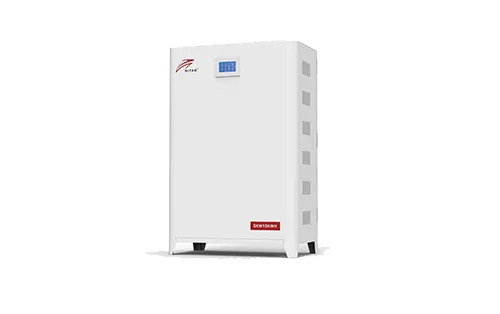
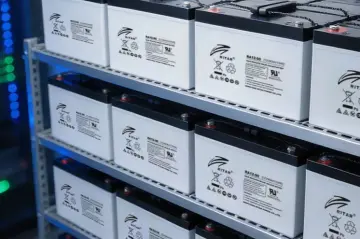
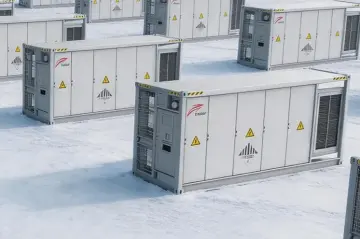
Ritar International's Solid-State OPzV Battery Energy Storage Systems offer inherently safe lead-acid technology with advanced solid-state electrolyte performance, eliminating fire/explosion risks. Exceeding 3,500 cycles at 80% DOD, our modular design suits diverse energy needs. Residential/small commercial options include integrated 15kWh and 40kWh cabinets with MPPT tech and optimized charging. Industrial/utility scale solutions feature 216kWh cabinets and megawatt containers with a three-level BMS for stable power and maximized lifespan. Ritar's ESS provides integrated, economical, and fully protected power storage for any project size.
OPzV is an abbreviation of the German words Ortsfest (stationary), Panzerplatte (tubular plate), and Verschlossen (sealed). It refers to a stationary battery using tubular positive plates and a sealed gel electrolyte structure.
While both use gel electrolytes, the key difference is the positive plate construction:
• Standard Gel: Uses flat plates.
• Ritar OPzV: Uses Tubular Plates. The tubular design holds the active material (lead dioxide) in reinforced non-woven tubes, preventing it from shedding during deep cycles. This leads to a significantly longer lifespan and higher reliability.
It is referred to as solid-state because Ritar uses a nano-silica gel electrolyte that is completely immobilized. This solid-state structure eliminates acid leakage, prevents electrolyte stratification, and provides superior thermal stability compared to liquid-based batteries.
Ritar’s OPzV technology is designed for high-frequency cycling:
• 3,500+ Cycles at $80\%$ Depth of Discharge (DOD).
• Up to 20+ Years design life in float service at $25^{\circ}C$.
This makes it one of the longest-lasting lead-based technologies in the world, comparable to some lithium-ion chemistries in terms of total energy throughput over time.
Yes, it is among the safest energy storage technologies available.
• No Fire Risk: Unlike some lithium chemistries, OPzV is non-flammable and has no risk of thermal runaway or explosion.
• Zero Leakage: The solid-state gel is leak-proof, even if the casing is damaged.
• Maintenance-Free: It is a VRLA (Valve Regulated Lead Acid) system, meaning it requires no water topping and emits virtually zero fumes.
OPzV systems are renowned for their wide temperature tolerance (typically $-40^{\circ}C$ to $+65^{\circ}C$). The gel electrolyte acts as a thermal mass, preventing the battery from drying out in high heat and protecting it from freezing in cold climates. This often eliminates the need for expensive, high-maintenance HVAC systems in outdoor containers.
Because of its safety and long-duration discharge capabilities, it is ideal for:
• Utility-Scale Solar/Wind Storage: Smoothing out renewable energy production.
• Telecommunication Hubs: Reliable backup in remote or high-heat areas.
• Micro-grids: Providing a stable energy backbone for islands or remote villages.
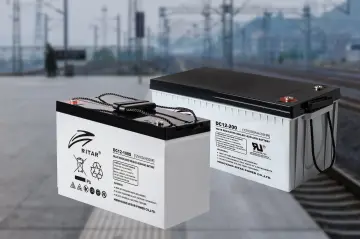
• Critical Infrastructure: Data centers, hospitals, and railway signaling.
Ritar employs a three-level management architecture to ensure system health:
1. Cell Level: Monitoring individual battery health.
2. Pack/Cluster Level: Managing strings to prevent inter-rack circulation.
3. System Level: Coordinating with the Power Conversion System (PCS) and grid.
Yes. One of the greatest environmental advantages of the OPzV system is that it is $99\%$ recyclable. Unlike lithium batteries, which have complex and expensive recycling processes, there is a mature global infrastructure for recycling lead-based batteries, making OPzV a highly sustainable choice for "green" energy projects.
While lithium batteries have higher energy density (smaller footprint), Ritar OPzV often offers a lower TCO in specific scenarios. Its lack of requirement for complex cooling, lower fire suppression costs, and 20-year lifespan mean that for many stationary large-scale projects, the cost per kilowatt-hour stored over the life of the system is extremely competitive.


 AIDC
AIDC
 Residential
 Commercial & Industrial
 Data Center
 Railway
 Telecom Base Station
 Motive Power
 Others