EN
EN
 cn
cn 

Artificial Intelligence is driving an unprecedented surge in data center power demands. AI training clusters and inference workloads push rack densities to 50-120 kW or higher, far exceeding traditional IT loads. In this high-stakes environment, data center UPS systems and data center backup power solutions are mission-critical. A reliable uninterruptible power supply for server room or full facility must deliver instantaneous response, high power density, and extended bridging time to generators while minimizing footprint and operational risks.
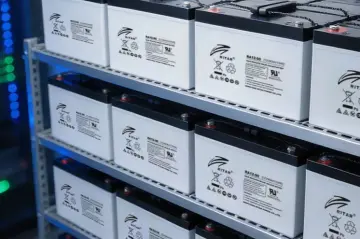
Selecting the right data center UPS battery has never been more important. Traditional valve-regulated lead-acid (VRLA) batteries are reaching their limits. Lithium iron phosphate (LiFePO₄ or LFP) chemistry has emerged as the superior choice for server room UPS systems and large-scale AI deployments. Manufacturers like Ritar Power offer specialized UPS lithium batteries optimized for these demands.
AI workloads are not only power-hungry but also highly dynamic. Sudden spikes in GPU utilization create rapid load fluctuations that stress power infrastructure. Brief outages can corrupt training runs costing millions and delay model development by days or weeks. Data center backup power systems must provide seamless bridging—typically 5-15 minutes or more—while supporting high discharge rates.
Key requirements for modern data center UPS include:
High power density to support dense rack configurations without expanding electrical rooms.
Fast response and recharge capability.
Long cycle life under frequent partial discharges.
Compact footprint and reduced weight for easier deployment in space-constrained facilities.
Enhanced safety in densely packed environments.
Integration with existing UPS inverters and BMS for server room backup power.
Data center UPS manufacturers are shifting toward lithium-based systems to meet these needs. Ritar’s offerings, including rack-mounted and dedicated UPS lithium batteries, address AI-specific challenges with modular designs suitable for both small server rooms and hyperscale facilities.
Among lithium-ion variants, LiFePO₄ stands out for data center applications due to its inherent stability and performance profile:
Superior Safety Profile: LFP chemistry has one of the highest thermal runaway thresholds among lithium technologies. It resists overheating, overcharge, and short circuits better than NMC or other nickel-based chemistries. This is vital in data center batteries where fire suppression systems and dense packing amplify risks. Advanced Battery Management Systems (BMS) in Ritar solutions provide multi-level protection at cell, module, and rack levels.
Long Service Life and Cycle Performance: LFP batteries routinely deliver 4,000–6,000+ deep cycles with 80%+ capacity retention, equating to 10+ years of service in UPS duty. In contrast, lead-acid typically lasts 3–5 years with fewer cycles. For AI facilities with potential frequent testing or grid events, this longevity drastically reduces replacement frequency and associated downtime.
High Power Density and Efficiency: LFP packs offer excellent energy and power density, enabling more runtime in less space and weight—often 50-70% smaller and lighter than equivalent lead-acid strings. Round-trip efficiency exceeds 95%, lowering energy losses and cooling demands. This is particularly beneficial for UPS for data center where every square meter supports revenue-generating IT equipment.
Wide Temperature Range and Fast Charging: LFP maintains performance across broader temperatures and supports rapid recharge, critical for maintaining readiness after short discharges common in grid-tied operations.
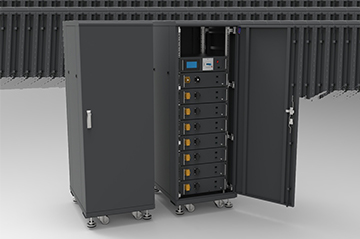
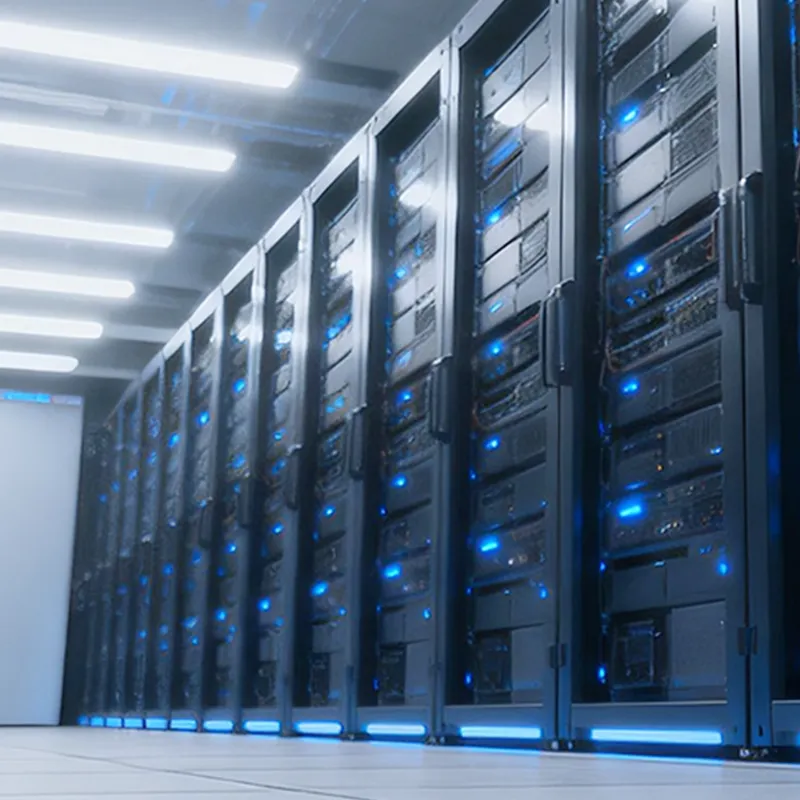
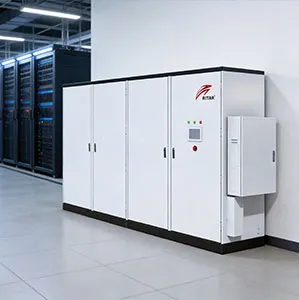
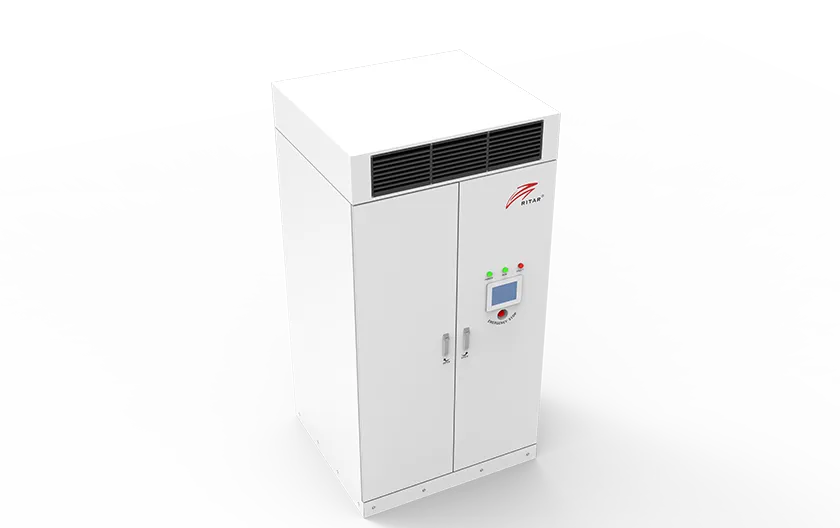
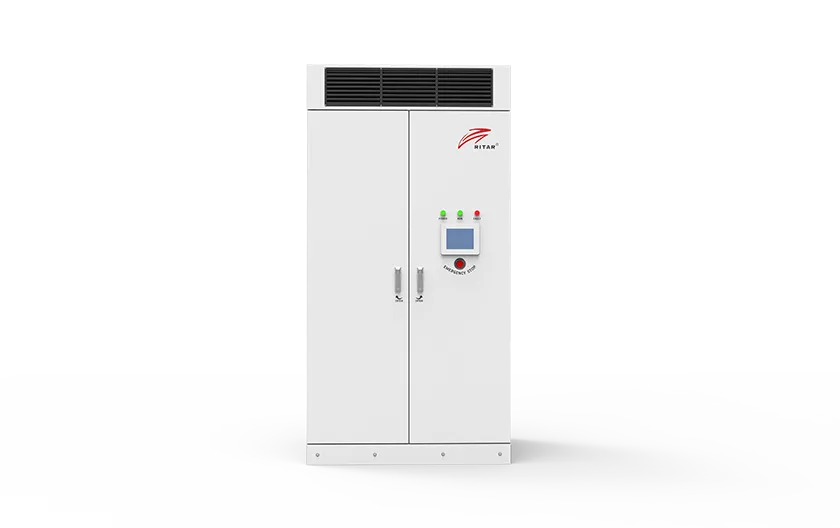
Ritar Power’s UPS lithium batteries leverage prismatic LiFePO₄ cells in rack-mounted formats, designed for direct integration with standard UPS systems. Their data center-focused energy storage solutions, as seen in projects like the Foshan Kepler Data Center, demonstrate real-world reliability in high-demand environments.
Traditional lead-acid batteries remain common but falter under AI loads:
Shorter lifespan and higher maintenance (watering, equalization).
Larger footprint and heavier weight.
Slower recharge and poorer performance at partial states of charge.
Higher total cost of ownership (TCO) due to frequent replacements.
Other lithium chemistries (e.g., NMC) offer higher energy density but compromise on safety and longevity, making them less ideal for mission-critical uninterruptible power supply data center applications. LFP strikes the optimal balance for data center UPS battery needs.
Ritar also supports lead-acid to lithium conversion kits, easing transitions for existing server room UPS systems without full infrastructure overhauls.
When evaluating data center UPS manufacturers and batteries, prioritize:
1. Power and Energy Specs: Ensure high C-rates for rapid discharge (e.g., 1C or better) matching AI rack demands.
2. Modularity and Scalability: Rack-mounted designs like Ritar’s allow easy expansion as AI clusters grow.
3. BMS and Monitoring: Intelligent systems with remote monitoring, predictive analytics, and seamless UPS integration.
4. Certifications and Compliance: UL, IEC, and data center-specific safety standards.
5. TCO Analysis: Factor in lifecycle costs, efficiency gains, and reduced maintenance.
6. Proven Deployments: Reference projects in similar high-density settings, such as Ritar’s data center installations.
For server room UPS solutions, consider distributed or centralized architectures. Rack-level Battery Backup Units (BBUs) paired with facility UPS provide layered redundancy ideal for AI.
Site Assessment: Analyze load profiles, existing UPS capacity, and space constraints.
Hybrid Approaches: Combine LFP UPS with generators and broader data center backup power systems for extended outages.
Thermal Management: Leverage LFP’s efficiency to optimize cooling, a major energy consumer in data centers.
Testing and Commissioning: Rigorous discharge tests and integration verification.
Future-Proofing: Choose scalable systems ready for higher voltages (e.g., 800V architectures emerging in AI).
Ritar’s expertise in data center battery energy storage includes both lithium and complementary solid-state technologies, offering comprehensive support from design to deployment.
LiFePO₄ delivers compelling economics through lower TCO—often 30-50% savings over a decade via reduced replacements, energy savings, and minimal maintenance. Environmentally, longer life means less waste, higher recyclability, and better support for renewable integration, aligning with ESG goals for data center UPS operators.
In the AI era, legacy batteries cannot keep pace with exploding computational demands. LiFePO₄-based UPS lithium batteries from specialists like Ritar Power provide the safety, density, longevity, and reliability that data center backup power requires. By choosing LFP for your uninterruptible power supply data center, operators gain peace of mind, operational efficiency, and a competitive edge.
The transition is straightforward with modular, compatible solutions and proven case studies. Evaluate your current setup against AI-driven requirements today—reliable power tomorrow depends on it.


 Residential
 Commercial & Industrial
 Data Center
 Railway
 Telecom Base Station
 Motive Power
 Others