EN
EN
 cn
cn 

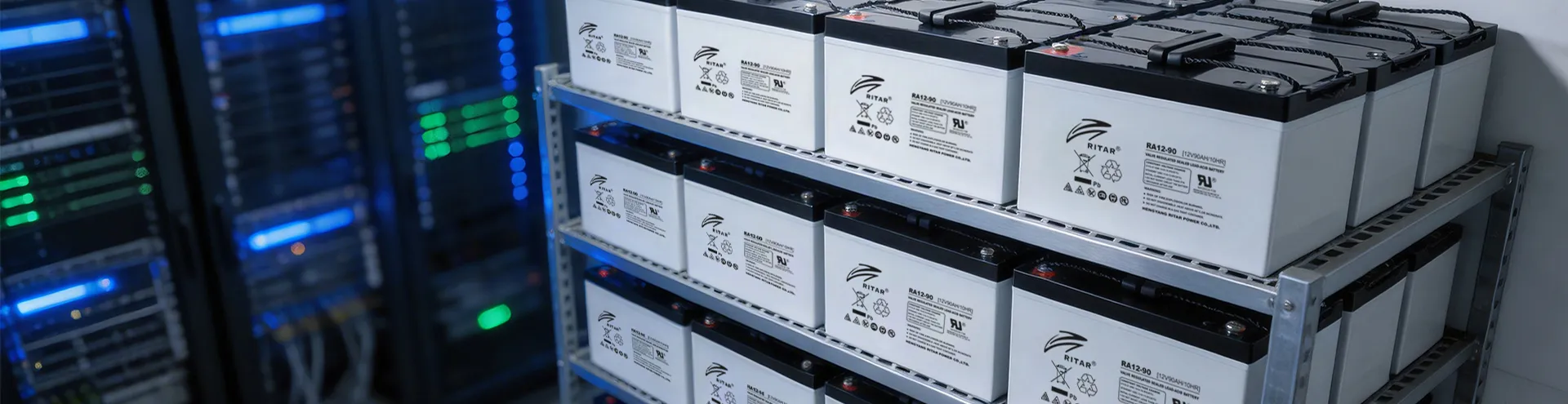
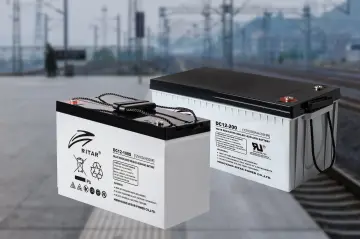
The Gel Battery series from Ritar is specifically engineered for demanding deep-cycle and energy storage applications. By incorporating a specialized nano-silica gel electrolyte, these batteries effectively eliminate electrolyte stratification and significantly enhance thermal stability. This unique technology route offers unparalleled performance in extreme temperature environments and excels in recovery from deep discharge. Designed for longevity and resilience, Ritar’s Gel batteries are the preferred choice for solar and wind energy systems, telecommunications, and maritime power, providing a stable and durable energy solution for remote and off-grid installations.
A Gel battery is a type of Valve Regulated Lead Acid (VRLA) battery where the electrolyte is not a liquid. By adding nano-silica to the sulfuric acid, the electrolyte is turned into a stable, jelly-like mass. This "solid-state" design prevents the electrolyte from leaking and eliminates the problem of "acid stratification" (where acid settles at the bottom).
While both are sealed and maintenance-free, they serve different purposes:
• AGM (Absorbent Glass Mat): Better for high-current "bursts," such as starting an engine or short-term backup.
• Gel: Superior for long-duration discharge and daily cycling. Gel batteries handle heat better and have a longer shelf life due to their robust chemical stability.
No. Gel batteries are completely maintenance-free. Because they use a recombination principle (where gases produced during charging are recombined back into water internally), you never need to top them up with distilled water. They are also spill-proof, meaning they can be installed in sensitive environments.
Yes, this is one of their primary strengths. The gel mass acts as a thermal heat sink, absorbing and dissipating heat more effectively than liquid or AGM batteries.
• High Temp: They are far less likely to suffer from "thermal runaway" in hot climates.
• Low Temp: They maintain better capacity in freezing conditions because the electrolyte won't freeze as easily as water.
Lifespan depends on the specific series (e.g., DG Series vs. OPzV):
• Standard Gel: 10–12 years design life.
• OPzV (Tubular Gel): 20+ years design life.
• Cycle Life: High-quality Gel batteries typically offer 800–1,500 cycles at $50\%$ Depth of Discharge (DOD), which is significantly higher than standard flooded or AGM batteries.
Precise voltage control is vital. Gel batteries are sensitive to overcharging.
• Charging Voltage: Typically $14.1\text{V}$ to $14.4\text{V}$ (for a 12V battery).
• Float Voltage: Typically $13.5\text{V}$ to $13.8\text{V}$.
Using a charger with a specific "Gel" setting is highly recommended to avoid drying out the gel and damaging the battery.
Renewable energy systems involve "deep cycling" (discharging deeply at night and charging during the day). Gel batteries are designed for this specific stress. They can recover from deep discharges much better than other lead-acid types, and their low self-discharge rate makes them ideal for systems that might sit idle during cloudy periods.
Yes. Because they are sealed and use a pressure-relief valve system (VRLA), they emit virtually zero fumes under normal operating conditions. This makes them safe for use in telecom cabinets, residential solar rooms, and hospitals where air quality and safety are priorities.
Yes. Because the electrolyte is a solid gel and cannot leak, you can install them on their side if space is limited. However, it is generally recommended not to install them upside down to ensure the safety valves can function correctly if an overcharge occurs.


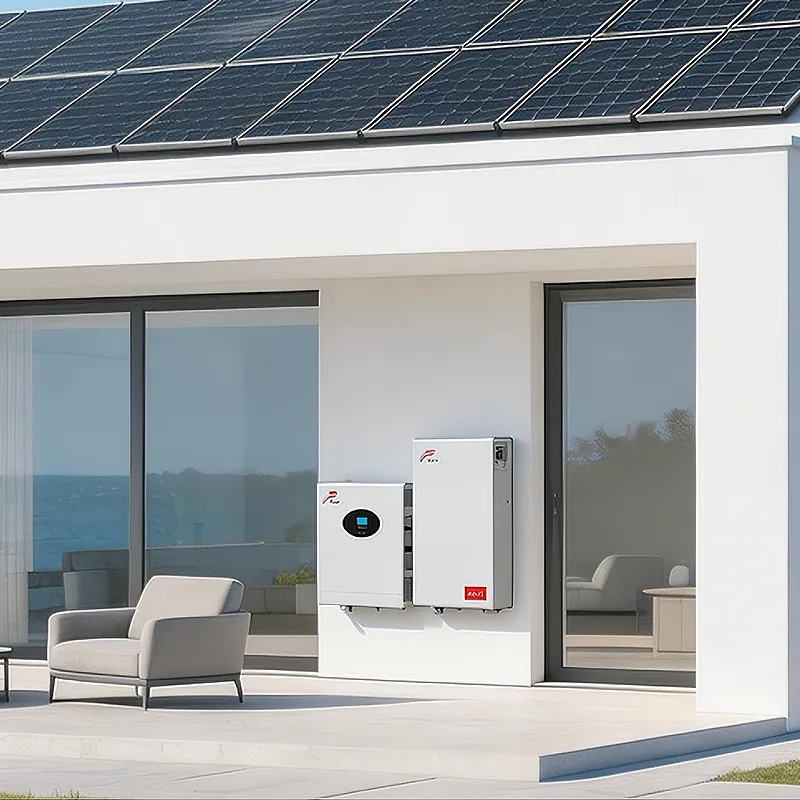
 Residential
 Commercial & Industrial
 Data Center
 Railway
 Telecom Base Station
 Motive Power
 Others