EN
EN
 cn
cn 

The artificial intelligence revolution is rewriting the rules of computing. Hyperscale data centers packed with thousands of high-performance GPUs are training models and running inference at scales unimaginable just a few years ago. A single modern GPU cluster can demand hundreds of megawatts, with power densities per rack soaring from traditional 8-10 kW to 30-100 kW or more. Global data center electricity consumption, already around 415 TWh in 2024, is projected to more than double to approximately 945 TWh by 2030, with AI as the primary driver.
This explosive growth in AI computing power isn't just straining power grids—it's exposing vulnerabilities in the backup systems that keep these facilities online. Traditional uninterruptible power supplies (UPS) relying on outdated lead-acid batteries are increasingly inadequate for the demands of grid-tied, high-density AI operations. Enter advanced grid battery storage solutions, particularly lithium-based UPS systems designed for grid connected battery storage. Companies like Ritar Power are stepping up with specialized UPS lithium batteries that address these challenges head-on.
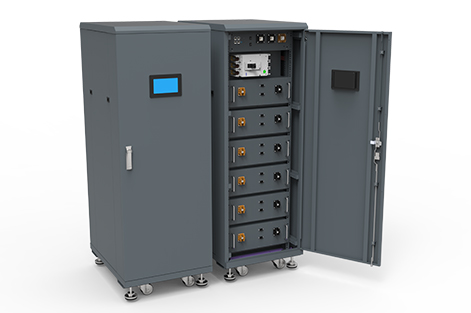
AI workloads differ fundamentally from conventional computing. Training large language models or running continuous inference creates sustained high-power draws with rapid fluctuations. A 1 GW data center might support 600,000–700,000 GPUs, each consuming significant energy when including cooling overhead. Power interruptions—even brief ones—can lead to massive computational losses, data corruption, or costly downtime.
Conventional UPS systems typically provide 5-10 minutes of runtime to bridge to diesel generators. In the era of AI, this is often insufficient. Modern designs call for greater redundancy—potentially 20% or more—and the ability to handle volatile loads. Lead-acid batteries, the historical standard, suffer from limitations: shorter cycle life (often 500 cycles), lower energy density, heavier weight, larger footprint, and reduced performance at higher temperatures. They require frequent replacements, increasing total cost of ownership (TCO) and operational disruptions.
Grid energy storage demands more. Data centers need systems that integrate seamlessly with the grid for peak shaving, frequency regulation, and resilience against outages or renewable intermittency. Grid scale energy storage systems are becoming essential infrastructure, not just backups. They enable grid tied battery storage that supports both immediate UPS functions and broader grid connected energy storage roles, such as load smoothing for AI's erratic power profiles.
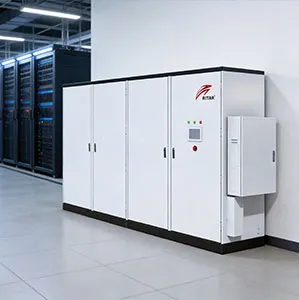
Lithium iron phosphate (LiFePO4 or LFP) batteries, like those offered in Ritar's UPS lithium battery lineup, represent a leap forward. These systems deliver higher energy density, allowing equivalent runtime in a much smaller, lighter package—often 50-80% less space and 40-70% less weight than lead-acid equivalents. This is critical for space-constrained data centers where every square foot counts for IT equipment.
Key advantages include:
Longer Lifespan and Cycle Life: Lithium UPS batteries often last 8-15 years or thousands of cycles, compared to 3-5 years for lead-acid. This reduces replacement frequency and downtime.
Faster Charging and Higher Efficiency: They recharge quickly and maintain performance across a wider temperature range (typically 0°C to 40°C or broader), easing cooling demands and lowering energy costs for HVAC systems.
Enhanced Safety and Reliability: Advanced Battery Management Systems (BMS) monitor and protect cells, preventing overcharge, deep discharge, and thermal runaway. Ritar's solutions emphasize safety for data center environments.
Scalability for Grid Integration: These batteries support grid scale batteries deployments, enabling participation in grid services like peak shaving and frequency response while providing robust UPS backup.
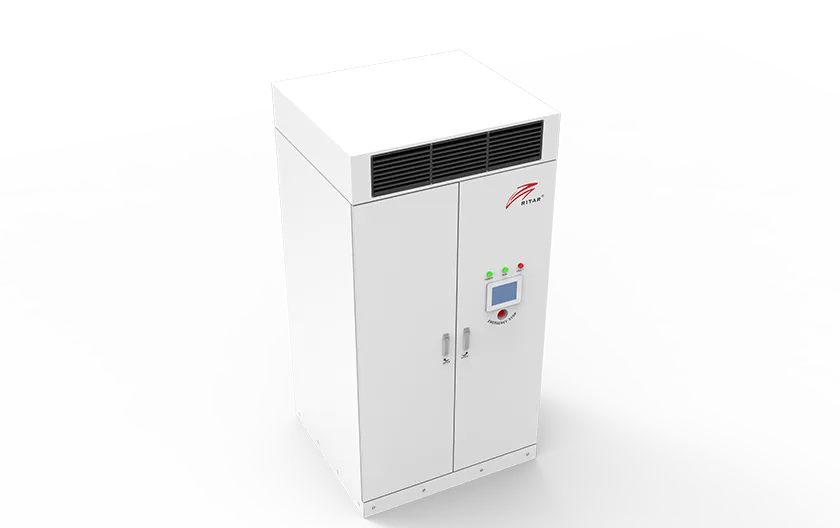
Ritar Power, a China-based manufacturer, specializes in UPS lithium batteries tailored for demanding applications including data centers. Their products, such as models with prismatic LiFePO4 cells (e.g., configurations like R-LFP192V50Ah), offer high-power output, modular rack-mounted designs, and compatibility with existing UPS infrastructure. They are part of a broader portfolio supporting data center energy storage, with proven deployments in various projects.
For operators transitioning from lead-acid, Ritar also offers lead-acid to lithium conversion solutions, making upgrades smoother for grid storage system enhancements.
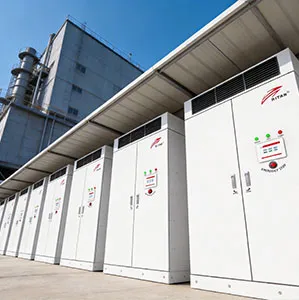
The grid itself is under pressure. Interconnection queues for new data centers stretch for years, with transmission upgrades taking even longer. Grid energy storage companies are pivotal in bridging this gap. On-site grid scale energy storage systems allow data centers to co-locate storage with generation or renewables, accelerating deployment and providing "speed to power."
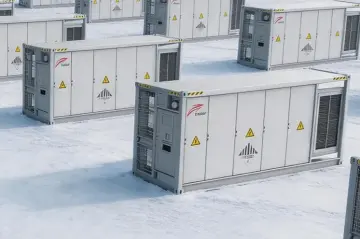
BESS (Battery Energy Storage Systems) paired with UPS can deliver hours of backup, smooth volatile AI loads, and generate revenue through grid services. For a 1 GW facility, UPS storage needs might reach 100 MWh or more, with redundancy. Lithium systems scale efficiently for these grid connected energy storage demands.
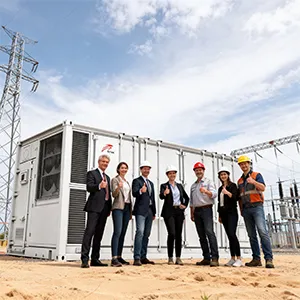
Ritar's involvement in data center projects (e.g., references to Foshan Kepler and others) demonstrates real-world application of their lithium solutions in high-stakes environments, aligning with global trends toward safer, more efficient storage.
The economics favor lithium. While upfront costs may be higher, lower TCO from reduced maintenance, longer life, smaller footprint, and energy savings makes them compelling. In high-utilization AI data centers, the ability to cycle more frequently without degradation is a game-changer.
Sustainability is another driver. Lithium systems support renewable integration, reducing reliance on diesel generators and lowering carbon footprints—key for operators facing ESG pressures. Grid battery storage enables better utilization of intermittent solar/wind, stabilizing supply for always-on AI computing.
Not all lithium batteries are equal. When evaluating grid energy storage systems or UPS upgrades, consider:
Compatibility with existing UPS inverters and BMS integration.
Certifications for safety and performance in data center settings.
Proven track record in similar high-power applications.
Scalability for future AI expansions.
Total system support, including monitoring and services.
Ritar Power positions itself as a reliable manufacturer with a focus on lithium UPS batteries optimized for these needs, backed by extensive energy storage project experience worldwide.
AI computing power isn't slowing down. Projections show U.S. data center power demand potentially reaching significant portions of national electricity by the end of the decade. Operators who invest now in modern grid tied battery storage and advanced UPS lithium solutions will gain a competitive edge in reliability, efficiency, and cost control.
The question isn't whether your UPS battery can keep up—it's whether you've upgraded it to handle the explosion. With solutions from forward-thinking providers like Ritar, data centers can harness grid scale battery storage to power the AI future securely and sustainably. The time to evaluate and deploy is now, before the next wave of computational demand overwhelms legacy infrastructure.

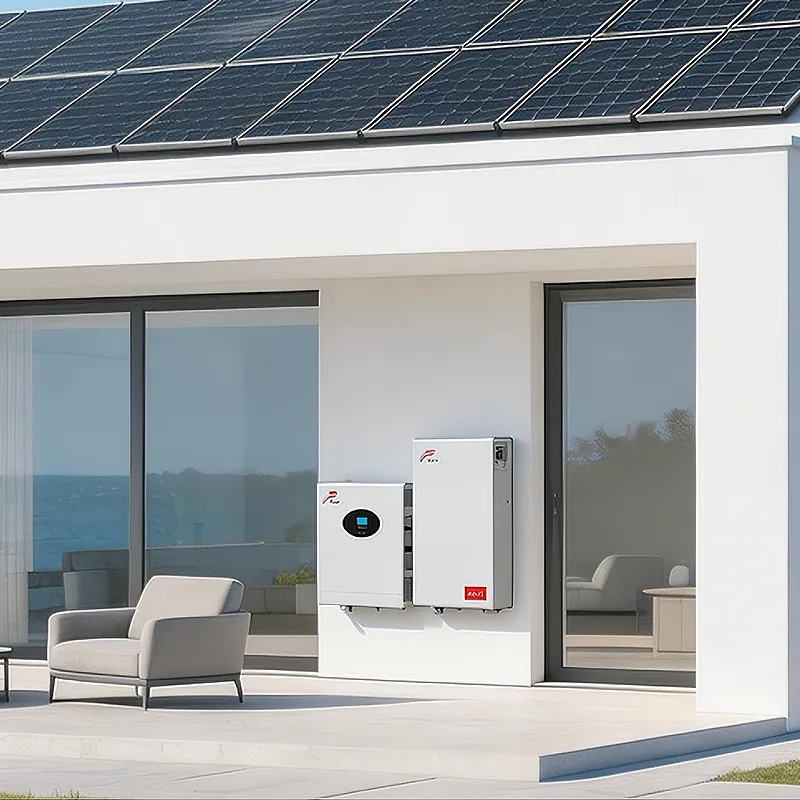
 Residential
 Commercial & Industrial
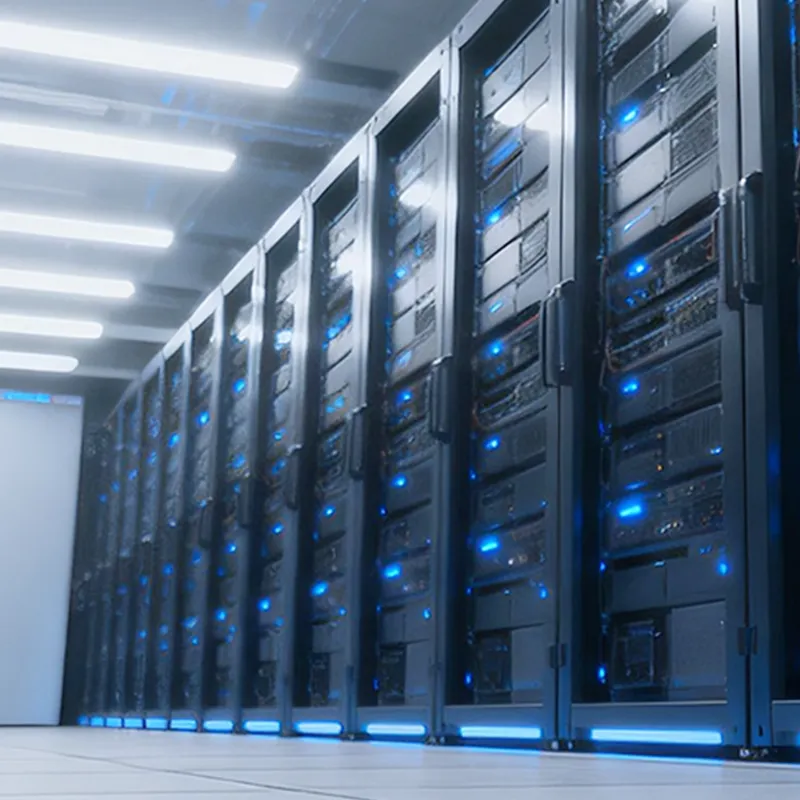
 Data Center
 Railway
 Telecom Base Station
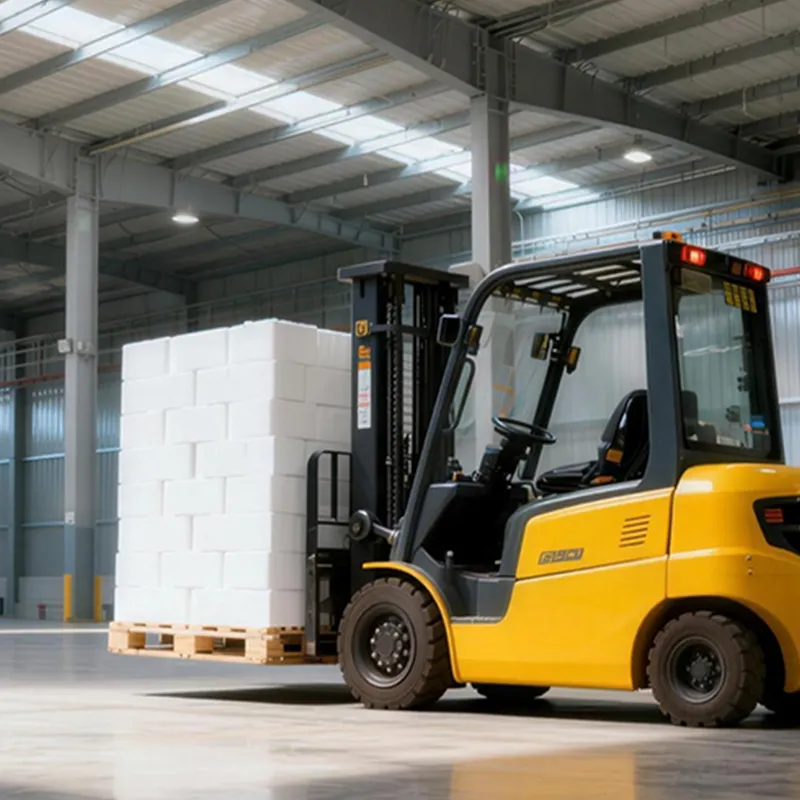
 Motive Power
 Others